Buiding Church Leaders Home
Search By:
Advanced Search
Church RoleTopicFree Samples
Train LeadersAssess My ChurchConnect With LeadersRespond to CrisisMentor & DiscipleMultimediaStore
Home > Articles > Too Busy to Serve?
Too Busy to Serve?
Can a purposeful church leader stop long enough to personally help individuals along the road?


Topics:Compassion, Congregational care, Empathy, Ministry, Outreach, Servanthood, Shepherding, Spiritual care
Filters:Church board, Hospitality, Outreach, Pastor, Pastoral care, Shepherd, Volunteer
Purpose:Ministry
References:Luke 10:30-37
Date Added:March 25, 2008

Sign up for our free Building Church Leaders newsletter:


Average Rating: 


Posted: April 15, 2008
Michael Aulia  (Guest)
Spot on! It's a great article. If we are not careful, we serve only to please people and not God!


Posted: March 28, 2008
Valeria Baxter  (Guest)
This article is very enlightening. It touches on the myth that most of us experience in getting involved in mission work. It speaks to the very thing that causes us to abandon the work that we can do, because we cannot master a plan to do it all. Thanks for sharing your experiences and reaffirming the fact, that it's the small things that make the greatest impact in our lives as well as the life of others.


Submit Your Rating and Review:

Choose star rating:

Name:
Comments: 1000 character limit 


Short-Term Missions Leader


Cancer


How to Be Heard
Mastering six overlooked fundamentals of clear communication.

 1 of 2

"What if the priest and Levite passed by the beaten man on the Jericho road, not because they lacked compassion, but because they were running late to a discipleship group or an important board meeting?"

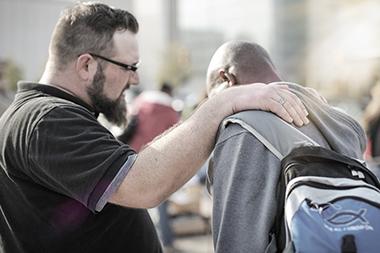
My college professor's application of the Good Samaritan parable didn't fully register until I'd been in professional ministry for nearly 20 years. I'd walked past so many who could have used my help because I was too distracted by church programs.

The best ministry moments don't arrange themselves neatly in my pre-planned activities. They usually spill out of spontaneous encounters at a critical moment in someone's life.

I've noticed that many people can't remember a teaching I gave two days earlier, but they remember with sparkling clarity a statement I made over lunch nearly a decade ago.

Nothing is more seductive in ministry than thinking that my efforts for the many justify my ignoring the individual God sends my way. Sometimes people need to be touched one at a time.

No Easy Lesson

I didn't come to this conclusion easily. I'll never forget the look on my guidance counselor's face when she heard I was planning to go into ministry.

"You don't even like people!" she exclaimed. I remember thinking, So what? Ministry is public speaking and leading a congregation to greater heights. If I get those right, I don't have to worry about individuals.

But such thinking is a myth.

A broken life by the side of the road never fits easily into our programs. Love is not efficient. And exemplifying love can't be scheduled. The beaten man in Jesus' story couldn't have waited three weeks for an appointment. Nor could he have waited for the Samaritan to study the need and launch a new ministry to care for similar victims.

Not all programs are wrong, but we dare not become so program-focused that we flee the next person God puts in front of us.

Jesus never lost sight of the individual or the moment in which help was most needed. In my part-time work helping to mediate conflicts in public education, I am constantly amazed how far bureaucracies will go to make a systemic change in their program rather than to grant one family an exception that would easily fix the problem.

Our fellowship has a saying: "Personal needs are too significant to commit to the rigidity of any program." Instead we look for ways to help through personal ministry.

Availability Without Burnout

I know this sounds like a recipe for burnout, but it doesn't have to be. The problem with handling needs personally is that they can multiply like spring rabbits. After all, the reason we create programs is to manage needs so they won't overwhelm us. Or so I thought.

The fallacy here is another of the ministry myths: "We cannot do for one what we cannot do for all."

This devious myth, however, flies in the face of Jesus' own example. Jesus lived each day with an eye for those God had placed before him. But to be accessible like him, we need two skills that he demonstrated: